
On this page


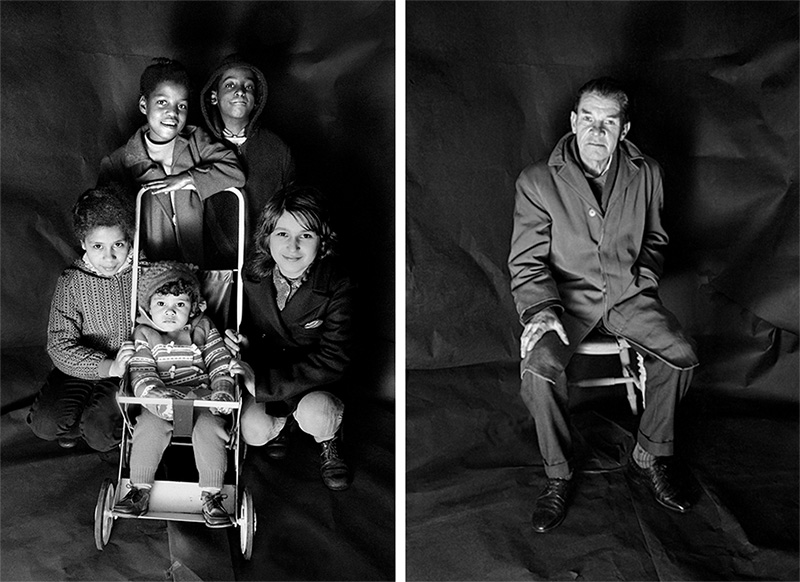
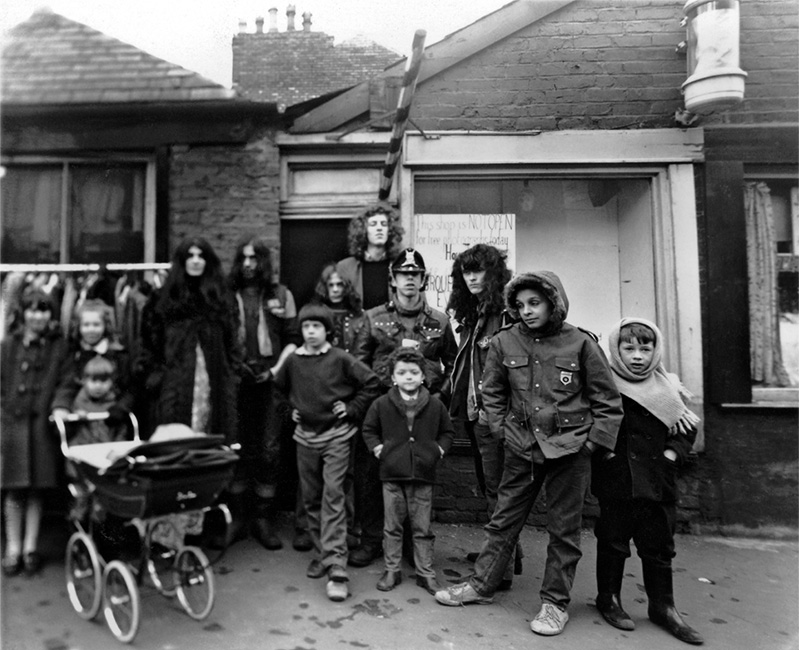
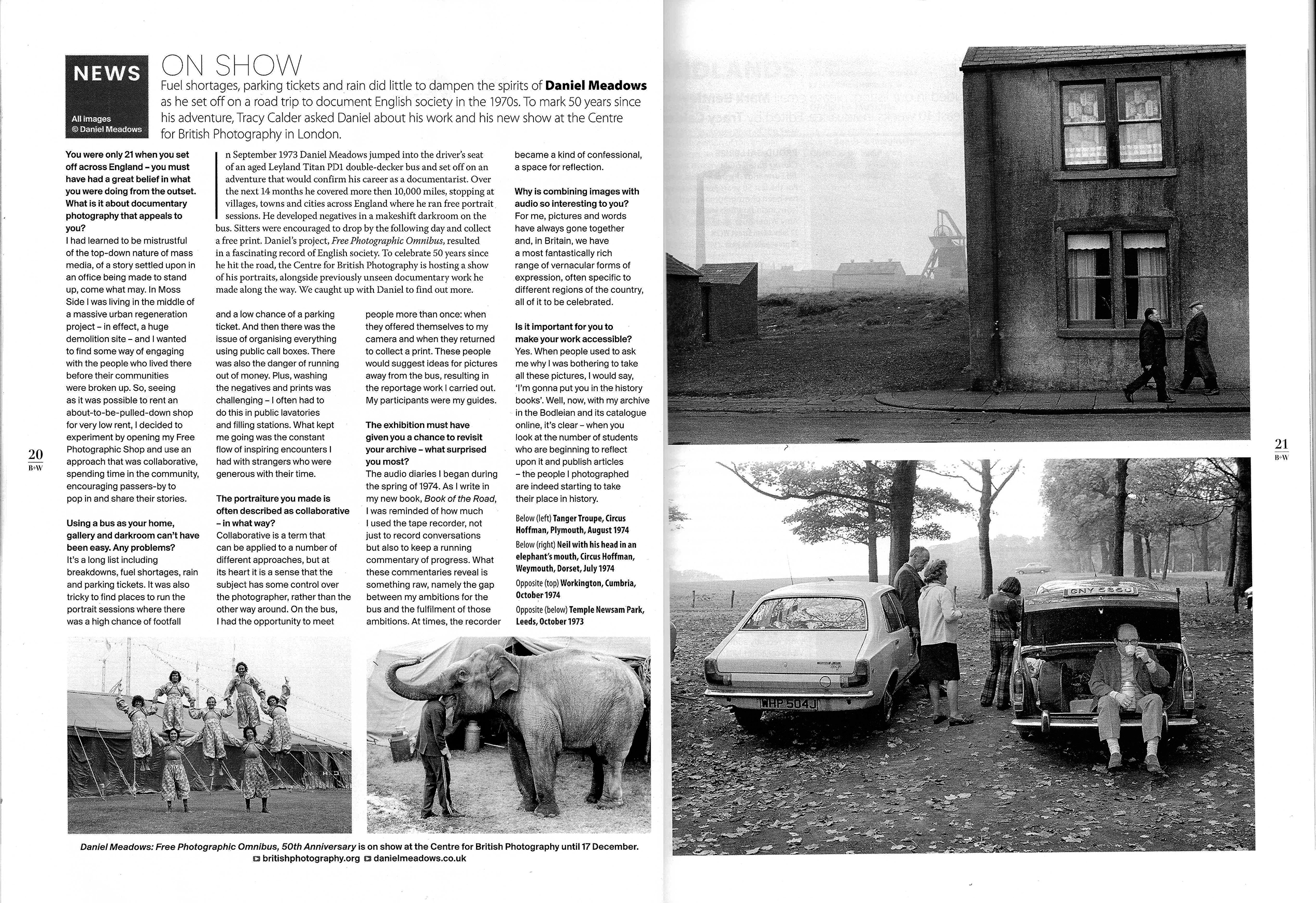
The Daniel Meadows archive, assembled over four decades, contains many thousands of my photographs, rolls of film and contact sheets, posters, magazines, books, receipts, newsletters, correspondence, notebooks, audio tapes, digital stories and other contextualising documents. Currently I am working on ways to make this stuff visible to researchers and so uncover some of the ways it adds to knowledge.

Beginnings
I began to focus on my archive in 2008 when I received approaches, simultaneously and independently, from two different institutions: Birmingham Central Library and the University of the Arts London (UAL). Peter James, head of photographs at Birmingham Library and Archive Services, wanted to acquire some of my pictures for the city's Sir Benjamin Stone (all links open in a new window) Legacy collection. Prof. Val Williams, director of UAL's Photography and the Archive Research Centre (PARC) wanted to curate a retrospective exhibition and make a book about my career as a documentarist.

Cataloguing the negatives
The archive is kept in my Monmouth studio. It is dry and well cared for. However, in 2008, it was not catalogued. So, before James and Williams could begin work, I had to compile a list of the subject matter covered by my 2,165 rolls of documentary pictures and enter the data into a searchable database. This task took me 16 months. When finished and printed out, the list of contents filled almost 300 closely-typed pages.

Digitising the darkroom
In December 2008 James made a successful bid to the Art Fund for money to purchase, for Birmingham Library, a set of twelve of my photographic prints (see the online press release). This purchase raised enough money for me to complete the digitisation of my darkroom. In the following months (and years) scanning negatives and preparing master image files kept me busy. Indeed it still keeps me busy.

Acquisition of archival storage materials
In June 2009 James, who by then had become interested in acquiring the whole of my documentary archive, provided me with archival quality negative bags, print sleeves and boxes sufficient to rebag all of the films and contact sheets in my documentary collection.

Williams commences her research
In October 2009 Val Williams made her first research visit to Monmouth. Her ambition was to establish a research context within which the archive could be properly explored in relation not only to photography and oral history but also to the social, physical, historical and cultural contexts which have determined documentary practice since 1970. Her immediate ambition was to produce a book and a travelling exhibition about my work (see the University of the Arts London website).

Collaboration with University of Wales Newport
During this visit, Williams invited Paul Reas, lecturer at the University of Wales Newport, to join the core group of project associates. In turn, Reas invited two photography students to join Fieldwork as volunteer interns. And so it was that (one day per week during term-time or whenever they could) Denise Fotheringham and Kelly Bishop began visiting to rebag negatives in archival sleeves and boxes. They also started work on cataloguing my archive of paper documents.


Kelly Bishop, Daniel Meadows, Pete James and Val Williams in the archive, 2009 (picture: Paul Reas)

Publication of journal article
Williams, V. 2010. The Daniel Meadows Archive: The Shop on Greame Street, 1972. Photography & Culture 3(1):81-90. With this article (500 words by Williams, 7 pictures by Meadows), Williams announced the commencement of our collaborative research project.

Research assistant appointed
In April 2010 Zenia Diwan, a year two Journalism, Film & Media student at Cardiff University, was appointed as Fieldwork's research assistant. Funded by the Cardiff Undergraduate Research Opportunities (CUROP) scheme, she worked for eight weeks during the summer of 2010 (mainly at my studio) helping to complete the rebagging of negatives and contact sheets, scanning negatives and documents, also researching the whereabouts of lost exhibition prints.

Research seminars
Seminars and symposia featuring discussion about work from the Meadows archive:

  • 13 November 2009, Monmouth: attended by Bishop, Fotheringham, James, Meadows, Reas and Williams.
  • 4 December 2009, Monmouth: attended by Fotheringham, James, Meadows, Williams and Russell Roberts, reader in photography at University of Wales Newport. (Roberts it was who, on this day, came up with Fieldwork as our title.)
  • 8 February 2010, Birmingham Central Library: attended by Bishop, Fotheringham, James, Meadows, Williams, together with John Myers (photographer), Jonathan Blyth, Matthew Pontin & Timothy Mills (Fotonow, Plymouth) as well as members of the library's archiving staff.
  • 17 June 2010, London College of Communicaion: led by Williams and attended by Meadows (guest speaker), PARC PhD students, some of their supervisors (including Prof. Elizabeth Edwards) and guests including: David Chandler (Photoworks), Homer Sykes and Tom Hunter (photographers), and Kathy Kubicki (UCA University of the Creative Arts, Farnham).
  • 11 August 2010, Monmouth: attended by Meadows and Williams, as well as Zenia Diwan (research assistant, Cardiff University), David Drake (of Ffotogallery, Cardiff), Gordon MacDonald (Photoworks) and Wendy Short (research administrator, PARC).
  • 9 December 2010, Plymouth Art Centre, Cameras in the Community attended by Meadows, Williams, James, also Blyth, Pontin and Mills from Fotonow, together with David Chandler (now a professor at the University of Plymouth), and Jan Williams & Chris Teasdale of The Caravan Gallery. (Download the poster: FOTONOW.pdf.)

Book and exhibition
In the autumn of 2010 Brigitte Lardinois (co-director of PARC) joined the team to coordinate the work of the various partners so that, with a launch date of October 2011 in mind, the book and the exhibition might be properly funded and produced. In addition to PARC at the University of the Arts London and Birmingham Central Library, partners now included book publisher Photoworks, the National Media Museum (Bradford) and Ffotogallery (Cardiff).

On 30 September 2011 the exhibition Daniel Meadows: Early Photographic Works opened at the National Media Museum in Bradford. To coincide with the opening, Photoworks published the 250 page (fully illustrated in black & white and colour) Daniel Meadows: Edited Photographs from the 70s and 80s by Val Williams. PARC also published the latest in their series of research publications Fieldstudy 14 which, over 16 pages, explores the series of colour photographs I made at Butlin's Filey, Yorkshire, in 1972. The exhibition ended its Bradford run in February 2012 and began touring. First stop was Ffotogallery's Turner House in Penarth: 14 July - 8 September 2012.

Other publications
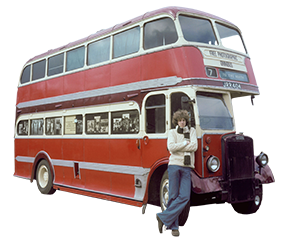
In addition to the PARC project other researchers in 2011 published academic studies of my journey in the Free Photographic Omnibus.

Case study
In the autumn of 2012 the Daniel Meadows Archive became a case study for the University of Plymouth's Photographers' Archives Research Project led by Jem Southam and Val Millington. Funded with support from Arts Council England the project is a collaboration with partners including the Birmingham Library; Redeye, the Photography Network; PARC (Photography and the Archive Research Centre) at the University of the Arts, London; and Dr. Jane Fletcher of the University of Derby (formerly of the National Media Museum, Bradford). The project aims "to preserve and make accessible the work and archives of an important generation of independent UK photographers of the post-war era who worked with analogue processes (many still alive), and to enable both photographers and the wider public to learn about and engage with this important aspect of our artistic, cultural and social heritage".

In preparation for Southam and Millington's visit to the Daniel Meadows Archive (December 2012) I made a new digital story (June Street) to show the depth and range of contextualising material that the archive contains:

Audience responses
Here follows a selection of bloggers' responses to the exhibition Daniel Meadows: Early Photographic Works at the National Media Museum and the book Daniel Meadows: Edited Photographs from the 70s and 80s by Val Williams, as referenced in the June Street digital story.

  • Fluffrick 9 Oct 2011
    "Finally, we reached the NMM and really enjoyed our time there. I particularly recommend the current ‘Daniel Meadows – Early Photographic Works’ exhibition which runs until February 2012.
    "It’s a collection of his photography, dating from the early 1970′s until the mid-80′s and does a brilliant job of documenting the vibrancy and singularity of working class life in a time when I was growing up and experiencing many of the same conditions, and living through a time when it felt like being working class and from the North made you the natural enemy of the people running the country."
  • Hannah Reynolds at Photography Matters 11 Oct 2011
    "In todays celebrity obsessed media culture, its exciting looking at work by someone who totally rejects this idea, and champions ordinary people, people like you and me. He embraces elements of photographic practice that in my experience modern photographic education tries to play down - the importance of coincidence and following your gut, and the possibility of photography inspiring actual change in the world."
  • Tom Mohan 24 Oct 2011
    "Daniel Meadows work was one which I thought would not appeal to me until actually seeing his work for myself, I practically fell in love with it."
  • Denise Fotheringham 26 Oct 2011
    "Subjects look straight into the camera and then into the viewer's eyes; we connect with the individuals across the 40 years' distance and feel the privileged and trusting relationship that existed between the strangers and the photographer all of those years ago. For this is work made with an open mind and an open heart; there is no cynicism nor exploitation here."
  • thekeytohell 26 Oct 2011
    "The Media Museum. And Daniel Meadows... That was it. I spent the next half hour in floods of tears... The photographs he took just looked like my early teens; there were front rooms with budgerigars and tights drying over the fireplace gangs of bootboys with 18 hole Doc Martens and half-mast denim flares lads with Dave Hill fringes and girls with feather cuts clutching each others' arms and giggling little boys with their mums lonely women with hideous wallpaper and hearth sets... All the details of my teenage years were there to be seen and I crumpled. There was worse turmoil to come however. He had gone back to... where these photographs were taken and managed to locate most of the subjects re-photographing them and positioning them next to the original image. That saw me off for good. It was so moving to see the passing of time and those faces that were recognisably the same but in the main now weathered and beaten and lost. I felt the weight of humanity on my shoulders as though my time was spent..."
  • Janet Broughton 11 Nov 2011
    "My personal favourite was 'June Street 1973' a series of images taken in each house on a terraced street in Salford which featured the occupants of the property, (including, in one image, a tortoise!) and gave a fascinating insight into ordinary lives. What really struck me when looking at these images was how our memories can be tied into ordinary objects, there were items in these images that I can remember from my grandparents houses when I was a child and they brought back a flood of memories.
    "Of the four exhibitions we visited on the day this was definitely the one that interested me most. I think the reason for this is because its photography of ordinary people and their lives which makes it... accessible... there's a whole different set of skills required to take the ordinary and everyday and turn it into an appealing set of images and this type of photography is much more interesting and inspirational to me."
  • Colin Pantall at PhotoEye 19 Dec 2011 "The directness, open curiosity and charismatic anonymity of the pictures make them a UK antithesis to Richard Avedon's star subjects of the American West."
  • tcphotologs 4 Jan 2012
    "This exhibition seemed to make everybody smile. It seemed about them. About their world. People. People they know. People I know. Or used to. Figures from the past. Grandparents and parents. People we used to be. There is something different here. A strange mix of document & art. Engaged and involved... I love these loops of knowledge. Of a postmodern approach teamed with a love and respect and a very human and down to earth perspective."
  • Francesco Loporchio 20 Jan 2012
    "It's one of those exhibitions where you're smiling throughout, and for the days following too."
  • Maria Spadafora at Culture Vulture 20 Jan 2012
    "Daniel Meadows is an inspirational documentarist... He really engages with people and lets them speak for themselves, rather than taking a pose, point and press approach... the ordinary really is extraordinary."
  • trickymum 19 Feb 2012
    "Particular favourite was the exhibition of photos from the 1970's by Daniel Meadows. He had photographed a street full of interiors, with families seated in their living rooms. We spotted an example of nearly every carpet, curtain, wallpaper, gas fire and sofa owned by ourselves or those we knew at the time! Cries of "Mum had that carpet!" and so on filled the room. We recognised it all and were only astonished that we had forgotten quite how much pattern we all squeezed in to one room in those days. Carpet, wallcovering, curtains and soft furnishings in probably toning colours (the pictures were black and white, but we envisaged shades of brown orange and cream) but wildly varied prints!"
  • Liz Chandler at Photomonitor 28 Feb 2012
    "The exhibition, Daniel Meadows: Early Photographic Works, curated by Val Williams contains Meadows’ major projects, along with work recently found in his archives. The collection is an engaging story, telling tales of the people of Britain in the 1970s... As a 22 year old, first-year photography student at Salford University, I think I speak for many of my generation in saying that Meadows is somewhat of an icon, a photographic hero."


Click here to send an email to Daniel Meadows


Florence

r/t: 5 min, 26 sec.

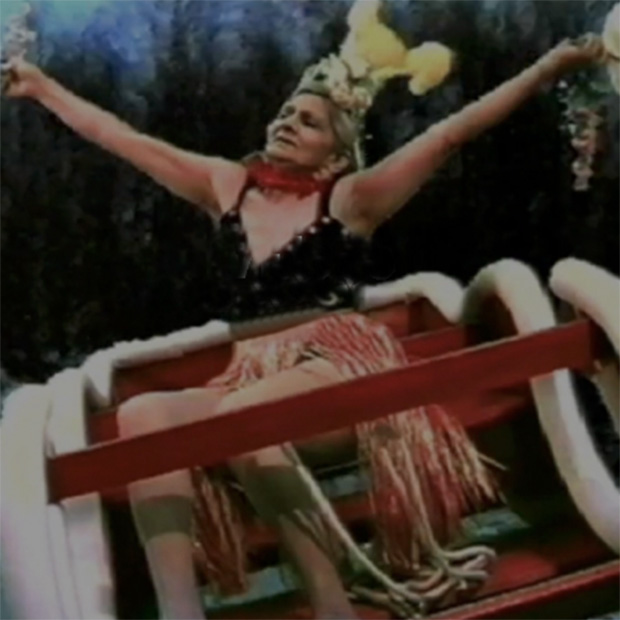
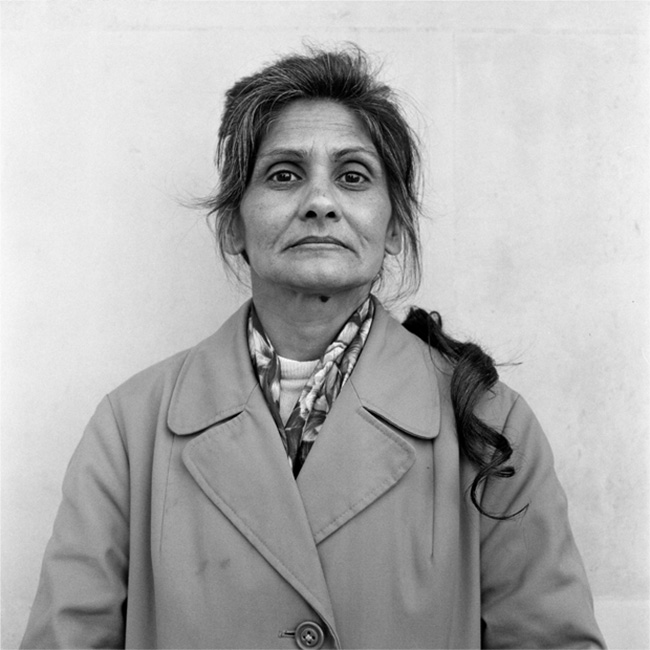
Once published, photographs take on lives of their own. Mostly we don't get to share in those lives but here's one picture that, just like its subject, couldn't help but "attract us into the play".

Alt. content
Select a story to view in the player: Florence
Needs Flash Player
<< Jeremy Seabrook >>
Inspirations: 8 of 10 - Book. 1973. City Close-up. Wonderful English oral history done in Blackburn, Lancashire. The book by which all other books of oral history must be measured.